
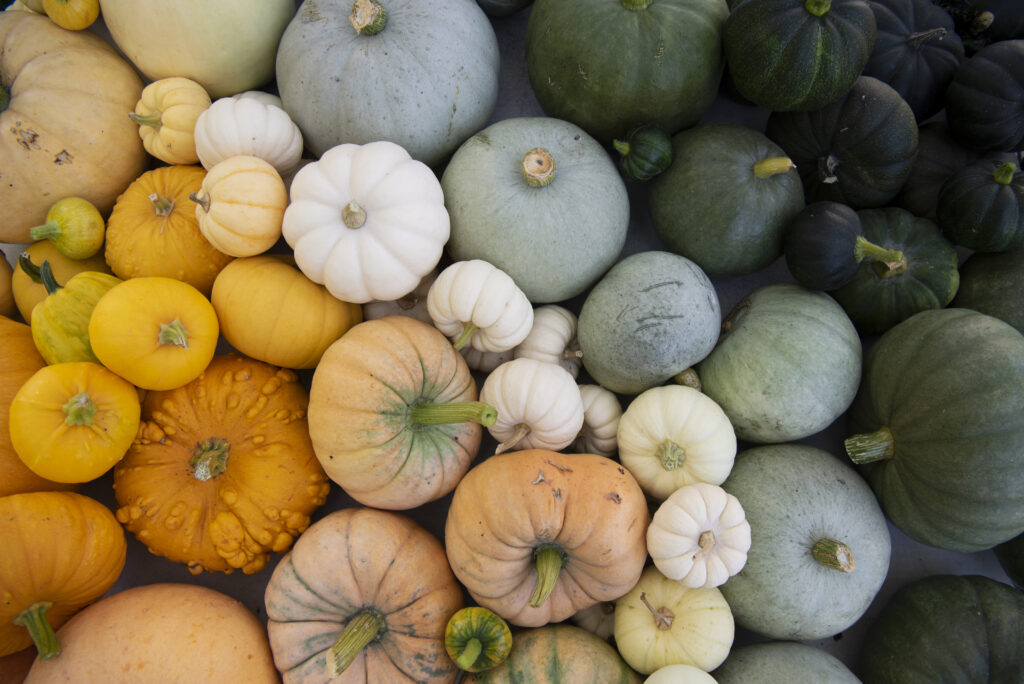
Pumpkins are easy to grow, making them a great choice for beginners. However, you don’t have to limit yourself to the traditional orange pie pumpkins or large jack-o’-lanterns. There are many different colours, shapes, and textures available, so consider trying something unique alongside your old favourites.
Ready to get started? Here are some quick tips for growing pumpkins in a cold climate with a short growing season!
This post contains affiliate links, which means that I earn a small commission at no extra cost to you if you purchase anything. You can read more about it in my privacy policy. Thanks for supporting Shifting Roots!
Direct Sowing vs Seed Starting
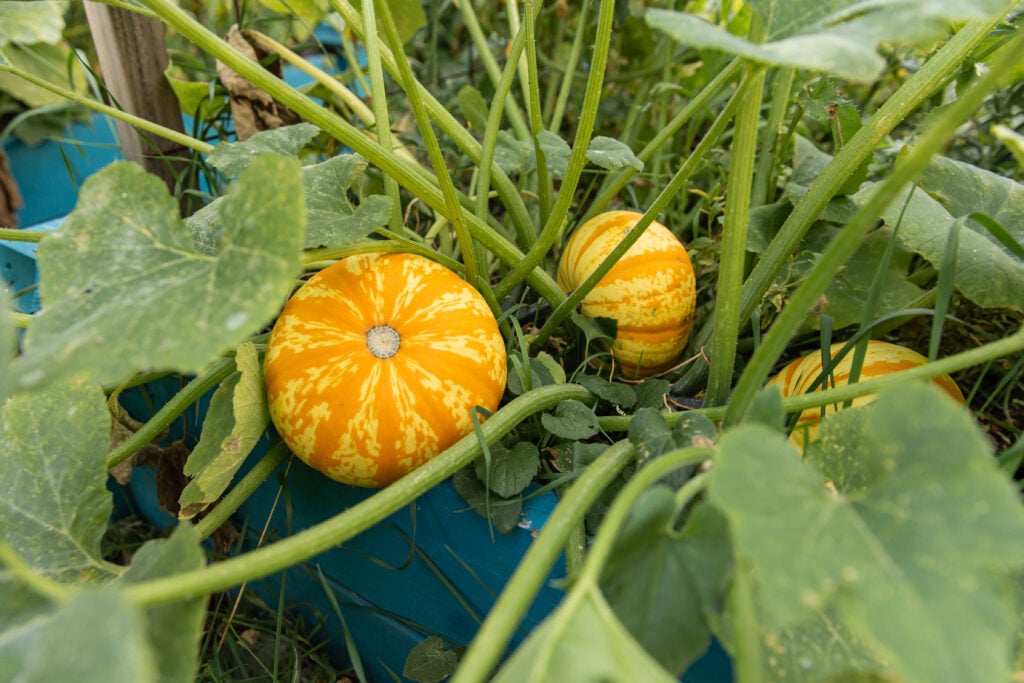
Pumpkins can either be direct sown or seed started. I prefer to do some of each. I’m not sure why, but it seems that some years direct-sown seeds perform better, while others are more successful with seed-started seeds. There’s no clear rhythm or reason for this, and it varies from year to year.
If I’m seed starting, I typically like to start my pumpkin seeds 3 weeks before the last frost, so they get a decent head start, but they don’t get so gigantic and unwieldy that it becomes problematic. (I’m looking at you people who start your pumpkins at Week 8, thinking earlier is better!)
Related: Vegetable Seed Starting Schedule
If the weather is cold, and you need to transplant out, I recommend putting a Kozy Coat around your pumpkins. They are very frost sensitive, so it’s better to wait a few days until the weather improves or to use the Kozy Coats when you put your pumpkins out there, so they don’t have to fend for themselves.
Other than that, pumpkins are pretty simple. Just make sure they get lots of water and enjoy watching them grow!
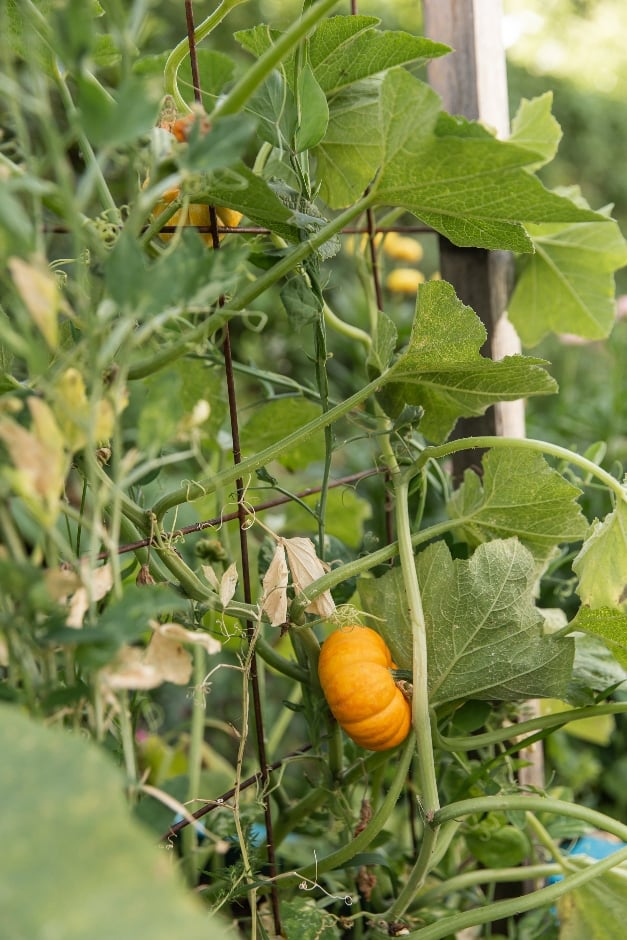
Related: How to Set up a Pumpkin Tunnel in Your Garden
Best Pumpkin Varieties
On my Zone 3 flower farm, the top three pumpkin varieties I grow are Baby Boo, Long Island Cheese, and Blue Doll. I use these varieties for both fresh and dried flower arrangements and find they give me a good variety of colours and sizes for markets and centrepiece sales. To choose the best pumpkin for your needs, consider your preferences regarding size, colour, texture, and whether you plan to use the pumpkins for decoration or cooking.
For the best varieties for any occasion, check out this blog post.

Tips for Harvesting
Pumpkins are generally ready to harvest when the bottom part, where the flower was, comes off very easily. They will continue to ripen and change colour inside your home after being harvested. While there is a chance of rot if you harvest too early, I haven’t found this to be a significant issue during my pumpkin-growing experience. It might happen to a couple of pumpkins, but it’s not a major concern.
Pumpkins can survive a light frost; however, I prefer to harvest mine before the frost sets in. If a very light frost occurs and the vines begin to die back, it becomes an open invitation for my free-range chickens to eat the pumpkins, so I make sure to remove them from the field as quickly as possible.

Related: How to Harvest & Process Fresh Pumpkin
Have any of your own pumpkin-growing tips? Let me know in the comments!
If you liked this blog post, find me on Facebook, TikTok, and Instagram for more cold-climate vegetable gardening tips, delicious recipes, and cut flower goodness! I also make weekly videos over on my YouTube channel. I hope to see you there!
NEED HELP IN THE GARDEN?
Green thumbs aren’t just given out at birth. They’re a combination of learning about gardening and trial and error. If you wish you knew more about gardening and had more confidence in your abilities, you need The Growing Roots Gardening Guide, everything you need to go from complete garden newb to confident gardener in one growing season.


Join the conversation