
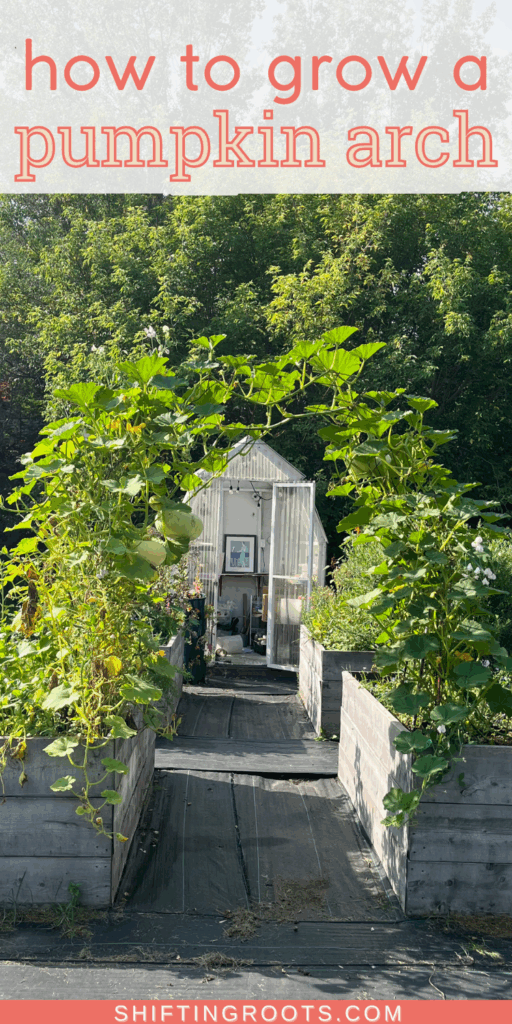
Creating a pumpkin tunnel is a fun way to save space in your garden while also adding beauty. In this post, I will share my method for planting a pumpkin tunnel, the varieties I use, and some helpful tips and tricks to achieve the best results.
Good Pumpkin Varieties for Pumpkin Arches
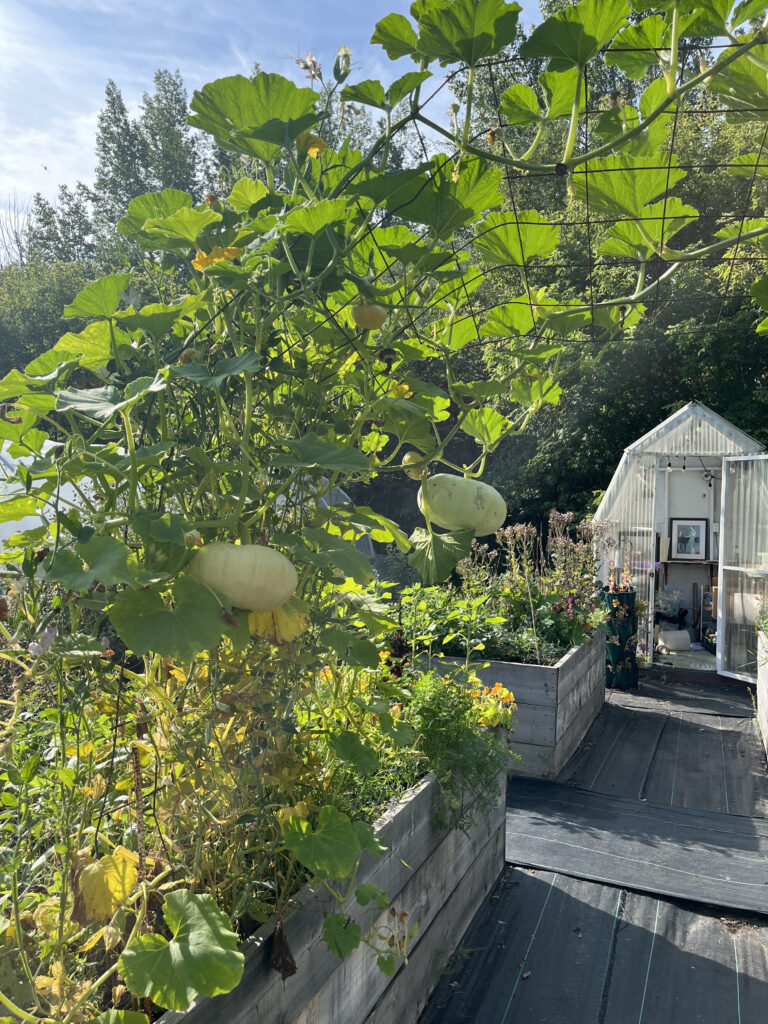
In general, you can use pretty much any pumpkin that you like. The bigger pumpkins will need a sturdier trellis. If you’re growing something that you know will reach a large size, ensure it’s supported by a trellis made from sturdy, well-constructed wood. You don’t just want a thin, flimsy wire trellis for those types of pumpkins.
If the pumpkin gets too heavy or you’re worried about it, you can always cut it off early. You shouldn’t have to worry about your pumpkins falling, as the stem and vine typically grow sturdy enough to support the pumpkin’s weight.
This year, I experimented with all sorts of varieties. I’ve found the easiest pumpkins to grow on a trellis are pie pumpkins, such as Jarrahdale and Sugar Baby, as well as smaller varieties like Baby Boo and Jack Be Little. This year, my bigger varieties have been just a little worrying as they grow up the trellis.

Related: The Best Pumpkin Varieties (for Any Occasion)
The Best Trellis for a Successful Pumpkin Tunnel
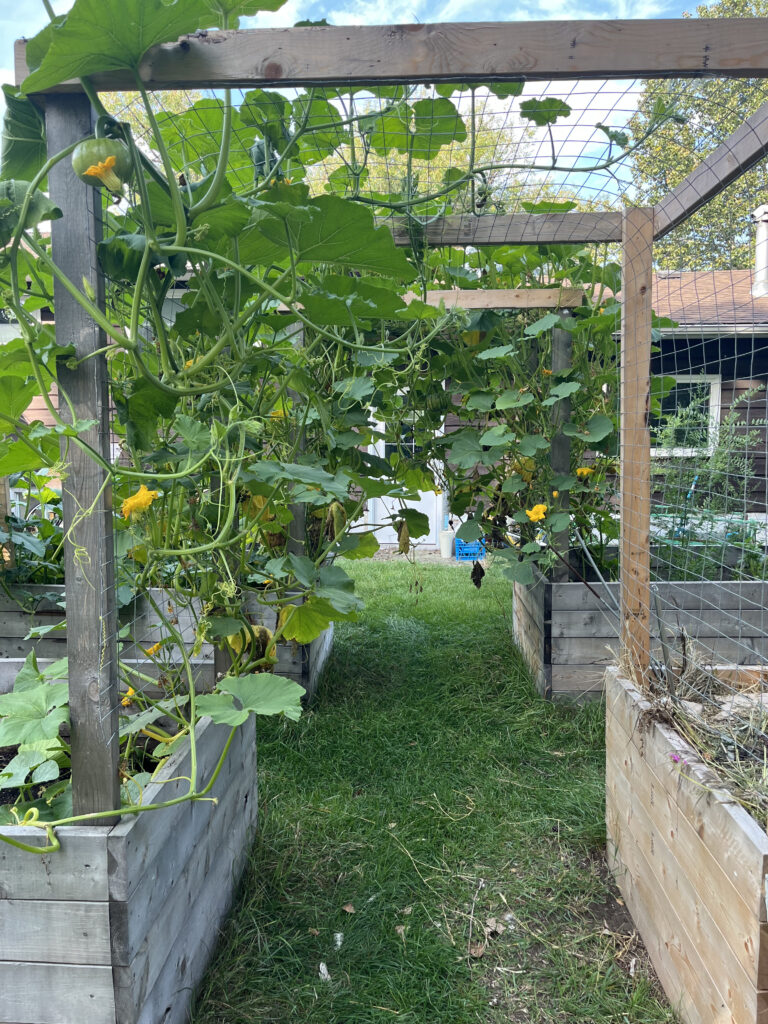
My favourite type of trellis is made of wood, which is nailed to either side of a raised bed. I then wrap it with either chicken wire or hog panelling. I prefer hog panelling because it is sturdier and can support most varieties of pumpkin you might choose to grow. You can also use inexpensive wire frames, but they are not as sturdy and are best suited for small to medium-sized pumpkins.
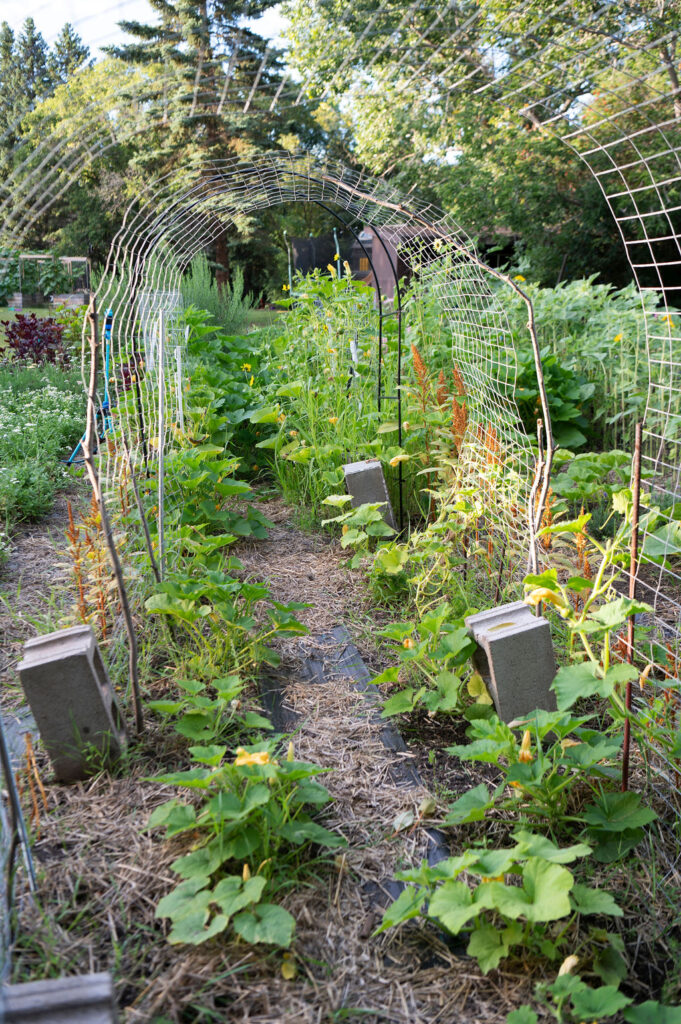
I actually ran out of materials to make a proper trellis this year, so I ended up using those metal posts that you step into the ground. I put my hog panelling around those posts, and so far, that seems to be holding up okay. I’ll let you know at the end of the season.
Tips & Tricks for Best Pumpkin Arch Success
Not all pumpkins want to go up the trellis!
In my experience, you generally need to guide the pumpkin vine to help it start climbing upward. Once it begins to climb, you can simply weave the vine in and out as needed. Unlike some other plants in the garden that are easier to manage, pumpkin vines typically require more effort to coax them into place.
That said, I truly believe it’s well worth it. This is actually one of my favourite jobs in the garden. Every 2-3 days, I go through all the areas on my acreage with pumpkin arches and weave the vines in and out of the netting.
All pumpkins love the sun.
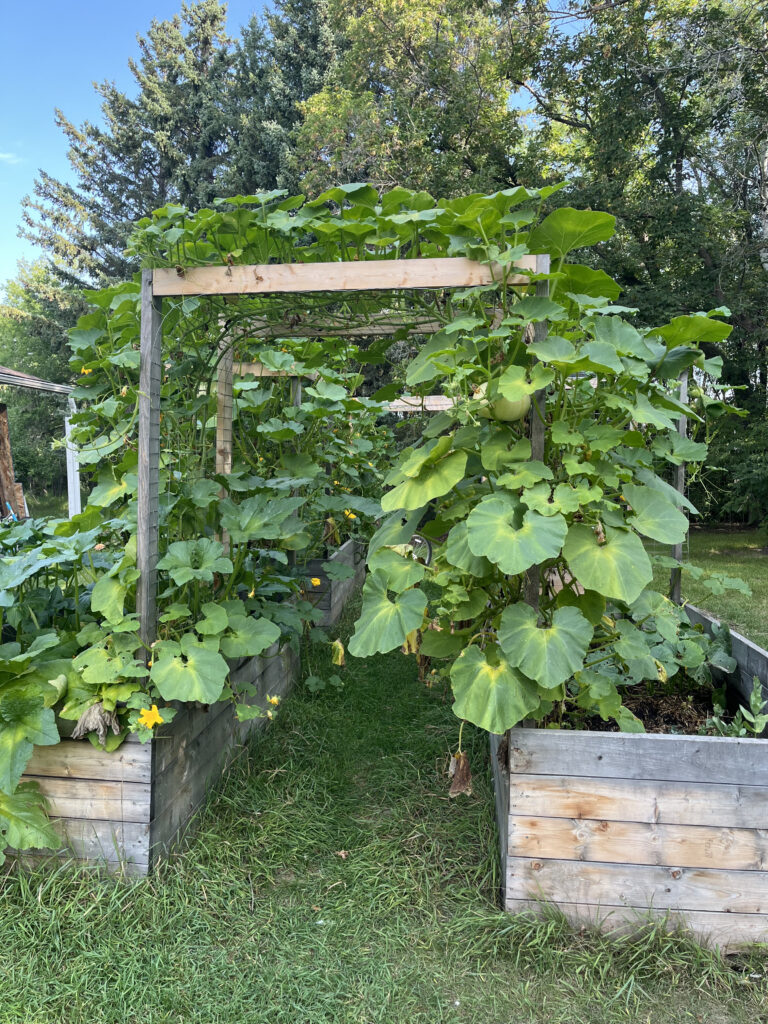
Avoid placing your trellis in a shady area. You can see in the photo below that the pumpkins closer to the front, which are in more shade, are not doing as well, while the pumpkins farther out, which are closer to the sun, are doing a lot better.
Pumpkins are heavy feeders.
Lastly, make sure to put lots of manure and compost in the area where you are growing your trellis, so your pumpkins are as successful as possible. Check out the difference it can make in the video below!
Will you try growing your pumpkins on a trellis next year?
If you liked this blog post, find me on Facebook, TikTok, and Instagram for more cold-climate vegetable gardening tips, delicious recipes, and cut flower goodness! I also make weekly videos over on my YouTube channel. I hope to see you there!
NEED MORE HELP IN THE GARDEN?
Green thumbs aren’t just given out at birth. They’re a combination of learning about gardening and trial and error. If you wish you knew more about gardening and had more confidence in your abilities, you need The Growing Roots Gardening Guide. Everything you need to go from complete garden newb to confident gardener in one growing season. Get all the details of what’s inside here!




Join the conversation