
You have a dream in your heart of selling homegrown flowers. You’ve spent countless hours researching the right type of seeds and have experience growing basically all the flowers that you need on the flower farm.
Now that you’re ready to make your dream a reality… how much is this all going to cost!?!
As with many things in life, the answer varies widely, but in this blog post, I’ll try to give you an idea of the expenses you might need to account for and their cost ranges. Please note that these are regional prices that depend on your country of residence, tariffs, taxes, and other factors, but at least they serve as a good starting point!
Whether you’re on a budget, have farm connections, or are ready to invest, I hope this overview of the potential costs of starting a flower-farming business helps you on your journey!
Disclaimer: All prices are listed in Canadian dollars, unless otherwise stated. This post contains affiliate links, which means that I earn a small commission at no extra cost to you if you purchase anything. You can read more about it in my privacy policy. Thanks for supporting Shifting Roots!
A quick note on what the categories mean:
- Budget: For those working with minimal funds, using lots of DIY solutions and resourcefulness.
- Connect: For people with some budget and connections to other farmers, accessing deals, used equipment, or community help.
- Invest: For those with a large budget who want to get everything they need with fewer compromises, often buying new or top-tier equipment.
Before You Buy Seeds, You Need to Buy Soil
The first question to ask yourself is, where are you growing this flower farm?
If there is no established garden space and you are starting from absolute scratch, you’ll need to factor in the cost of rototilling, ideally with a tractor, or bringing in raised beds and soil. If you’re considering buying a small-scale tractor, that’s likely at least $25,000. If you’re renting one out for the day or paying someone to do it, I would budget $100 to $500 a day. Some folks have connections and maybe a family friend to do it for the cost of gas and a beer, while others might have to hire a professional, so this wide range covers all scenarios!
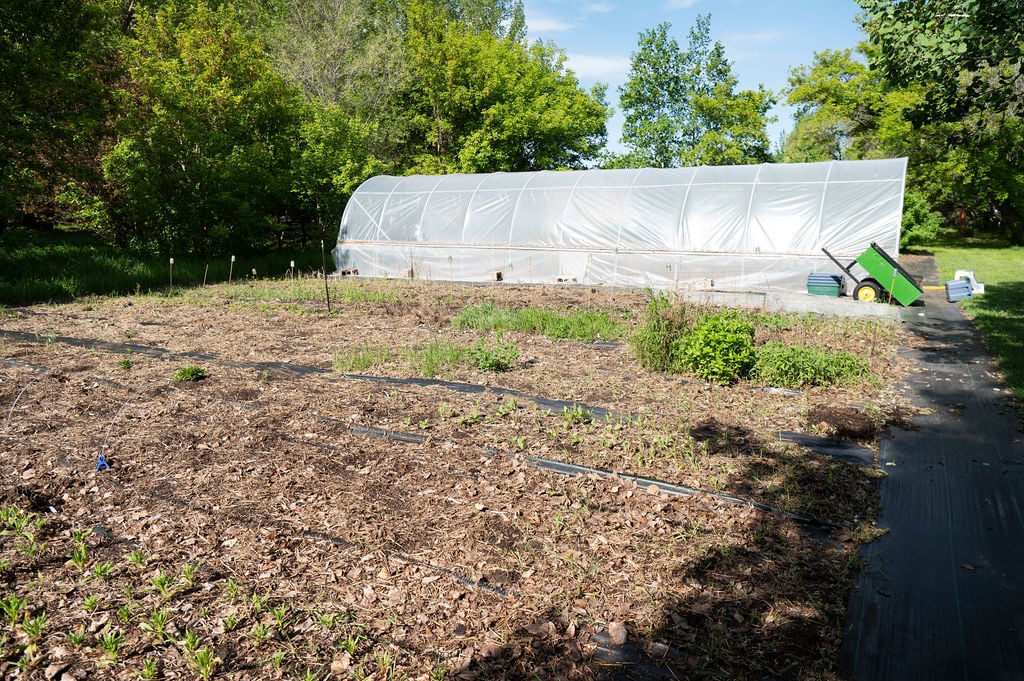
If you have a space where renting a rototiller is feasible, maybe $50 to $100 a day is a good range. To pay someone to do it will be anywhere from $100 to $500 again, for the same reasons. If you’re on a budget, you can also use the no-till method and start beds from scratch. In this case, the cost would be your own labour and sourcing all the cardboard for the first layer to snuff out weeds.
Related: The Choose Your Own Adventure of Starting a Garden Plot From Scratch
If you’re going the raised bed route, you have to decide whether to buy the metal ones or build your own from wood. The price of wood has gone up so much that the cost is essentially the same with either method. It’s about $250 a bed just for the supplies to make the bed (not including the soil).
(Note: I personally like to have my raised bed as tall as possible and use the Hugelkultur method, so if you want smaller beds, the cost might be lower. Just don’t tell yourself this is a cheap endeavour, because it’s not!)
If you are building with wood, you’ll want to make sure it’s untreated unless you will never ever, ever plant any food in there!
No matter which method you choose, you’re likely to bring in some soil, unless you already have an established garden space. It could range from free (excluding gas and labour) if you have a city compost program where you can load compost into your truck, to $1,000 to $2,000 (plus delivery fees). Again, these prices vary widely depending on how much space you’re trying to cover and the method you choose.
Prep & Soil:
Budget – $0-$50
Connect – $850-$2,500
Invest – $30,00-$40,000+

Related: How to Build Beautiful Raised Beds for Square Foot Gardening
Now, Onto the Seed Buying
For seeds, costs vary greatly.
If you’re not planning to grow too many things, not picking too many crazy varieties, or maybe you have seeds you’ve saved from the previous season, you can get away with as little as $100. More realistically, I would expect to spend $500 to $1,000 per growing season. This does not include investing in ranunculus and anemone corms, tulip bulbs, bulk perennials, or myriad other specialty flowers—investing in these crops significantly drives up that range.
Seeds:
Budget – $100
Connect – $500-$1,000
Invest – $2,000-$5,000+

Related: A Cut Flower Garden for $100? Yes, It’s Possible!
Supplies to Start the Seeds
At minimum, you’ll need seed-starting trays, soil blockers, or a traditional cell system, and these things don’t come cheap.
If you do choose soil blocking, it’s the cheaper option over time. That said, a Swift blocker costs about $500 CAD, and currently, you can’t even purchase it unless you’re in the US. The smaller 4-5 cell blockers are at least $80, and the really small 20-cell blockers are probably $50-$60. You can get a good selection of soil-blocking equipment from West Coast Seeds.
The basic black seed starting trays that everybody who grows somewhat professionally seems to use range from $2 to $5 per tray, but you’ll need at least 30 trays, so that’s $60 plus. If you have the budget, I recommend getting the colourful, sturdier trays from Bootstrap Farmer. You can get them from Garden Girl or on Amazon.

Related: The Soil Block Recipe That Actually Holds Together
But wait, there’s more!
You also have to pay for the potting soil to put your seeds in. You might be thinking a bag of potting soil is about $15… Think again!
You’re a flower farmer now. You don’t just need one bag of potting soil. You need 2-4 BALES of potting soil now, depending on your scale. I would budget at least $60 for potting soil, but it’s more likely to creep up to the $100 to $200 range.
Next, you’ll have to factor in grow lights and seed starting shelves!
You may already have some grow lights and shelves from doing up your normal garden, but as a flower farmer, you’ll need at least three shelves with five areas for lights each, plus all accompanying grow lights! The wire rack shelves I like from Costco are about $135 (if you’re lucky, you can get them on sale for $99, but they sell out very quickly).
The Sunblaster lights I love cost at least $100 each, but there are cheaper grow lights available if you’re on a budget. I personally love the shoplights I get at Uncle Weiner’s that connect to each other. You can get similar ones on Amazon.
Seed Starting Supplies:
Budget – $220-$320
Connect – $1,230 – $1,330+
Invest – $3,100+
Related: The Best Grow Lights for Seedlings (From Budget to Bougie)
Optional Costs
You could also factor in an increase in water costs, but I personally don’t notice a huge increase during the seed-starting portion of the year. However, during the main growing season, my main water bill shoots up anyway, from an extra $150 to $450 extra every month. If you don’t have to use city water and can use well water or rainwater, then, of course, that cost is free. But if you’re thinking of drilling a well, it’s an investment of $18,000+!
Irrigation is also an optional cost, but it will probably run around $1,000 dollars. This varies widely depending on the space you have to cover, but $1,000 is a good starting point.
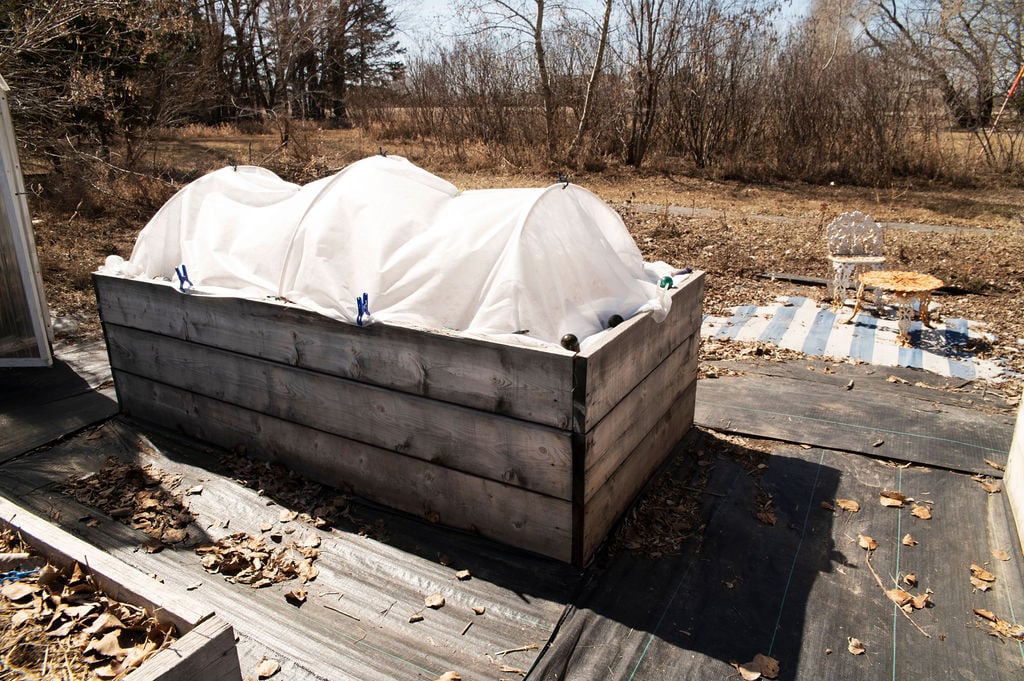
Shade cloth and frost cloth are also optional costs, typically costing $30 to $50 per roll. Landscape fabric typically costs $50 to $100 per roll. For basic gardening hand tools, expect to pay at least $25 per tool.
Optional Costs:
Budget – $105
Connect – $1,900 – $3,100
Invest – $21,000+
General Supplies
Now that your flowers are growing, what are you putting them in? How are you cutting them?
There’s a whole range of random gardening things you’ll now need. This could range from hoses, nozzles, and thermometers to track greenhouse temperatures, bunches of snips, tons of buckets, and flower wraps. All of these gardening supplies cost money. Of course, this section is highly variable, but I would say you will at least spend $500 a year on these types of items.
And we haven’t even discussed whether you’ll have a greenhouse!
Typically, people don’t start with a greenhouse in their first year or two. I would only recommend getting a greenhouse to harden off plants when you’re first starting out, because adding greenhouse-grown plants is a steep learning curve. However, when you are ready to make the leap, I would expect to pay $2,000 for a smaller one you buy off-season, up to $5,000-$10,000 for something larger or more commercial.
General Gardening Supplies:
Budget – $500
Connect – $2,500 – $2,750
Invest – $6,000 – $11,000+

Marketing Costs & Business Fees
While social media is free, very few marketing tools are.
You’ll need branded stickers, business cards, signage for your location, booth fees for markets, conferences, and shows. You’ll need fold-up tables, cloths for your display, a chair to sit on (don’t underestimate this one!), and more. If you’re doing outdoor markets, you might need to purchase a tent. If you’re doing a farm stand, you’ll need the stand itself!
There are so many factors, so this is all widely variable again. You might own some of these things or borrow some, but I would budget $500 to $ 1,000 for these expenses each year.
You also have to get a business license! These are typically in the $100- $200 range, but depending on the city or RM, they can be higher or lower for home-based businesses. You might also have website fees, professional association fees, and fees for paying helpers for harvesting, arranging, and selling (if your operation is big enough).
All of these things add up really fast!
Business & Marketing:
Budget – $600 – $700
Connect – $1,500 – $1,800
Invest – $7,500+

Courses & Books
Courses and books are not mandatory to start a flower farm, but they can definitely be helpful. I would say an average business course will cost anywhere from $1,000 to $2,000, while books are much cheaper, usually between $30 and $75 dollars a book.
If you’re looking for more guidance from me, you can get all four of my most useful books for flower farmers for under $200!
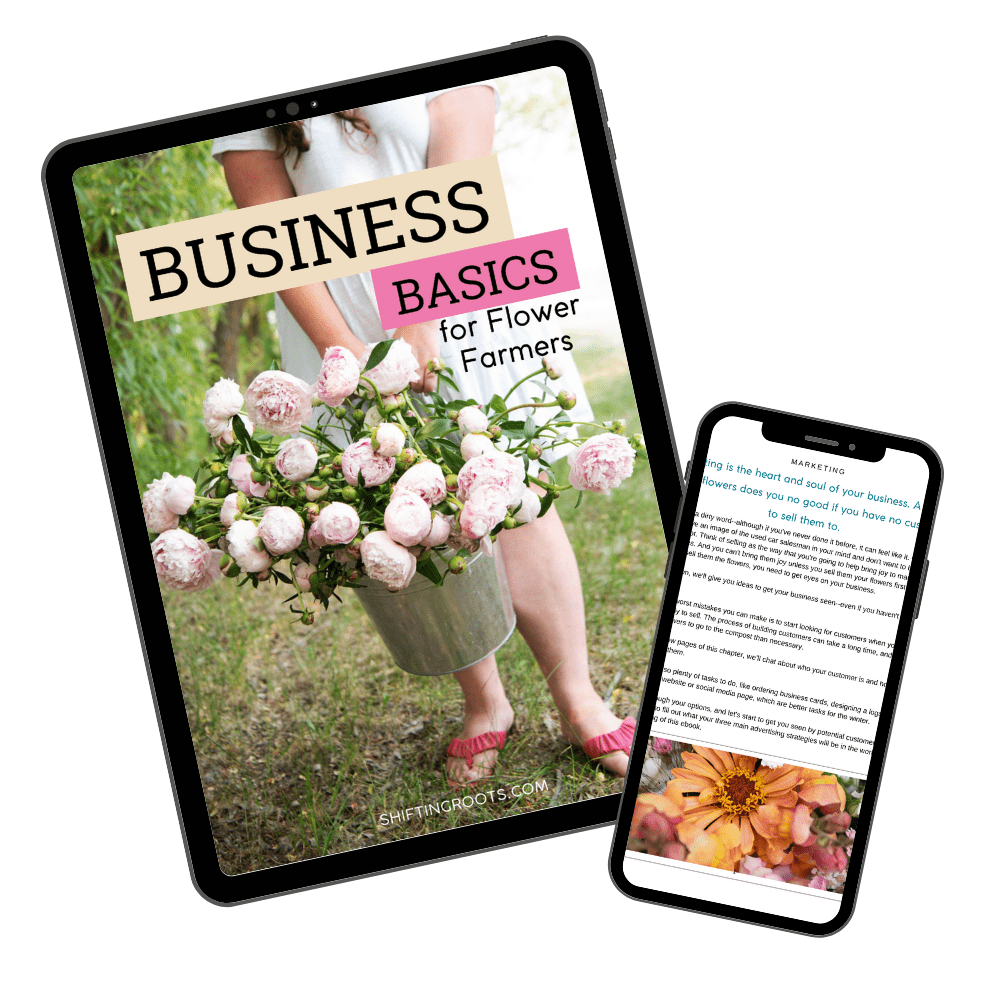
- Business Basics for Flower Farmers – $39
- Cut Flowers Made Simple – $24
- Bouquets Made Beautiful – $24
- The Frost-Proof Flower Garden – $39
Professional Development:
Budget – $0-$200
Connect – $0-$200
Invest – $1,200 – $2,200

Some Final Thoughts on Budgeting for Your First Year as a Flower Farmer
Don’t be discouraged by the long list and the high costs.
Everybody gets these things piecemeal, and just remember that I’m trying to account for both really small operations and medium-to-larger-sized operations. There is no way that I, some random lady on the internet, can magically tell what your situation will be. (That said, if you have very specific questions about starting your busines you can pick my brain here!)
If you’re doing this in a backyard or on a shoestring budget, you can likely get away with $1,500 in your first year of flower farming. If you’re on an acreage and have a bit more room to play around, it’s best to budget at least $10,000 to get started.
Grand Totals:
Budget – $1,525 – $1,875
Connect – $8,480 – $12,680
Invest – $70,300 – $101,300+

If you liked this blog post, find me on Facebook, TikTok, and Instagram to follow more of my farmer florist journey and join in the cut flower conversation! I also make weekly videos on my YouTube channel. You can also sign up for bouquet-making events and buy my flowers at my sister site Shifting Blooms. I hope to see you there!
Learn everything you need to run a flower farm with my book, Business Basics for Flower Farmers!


Join the conversation