
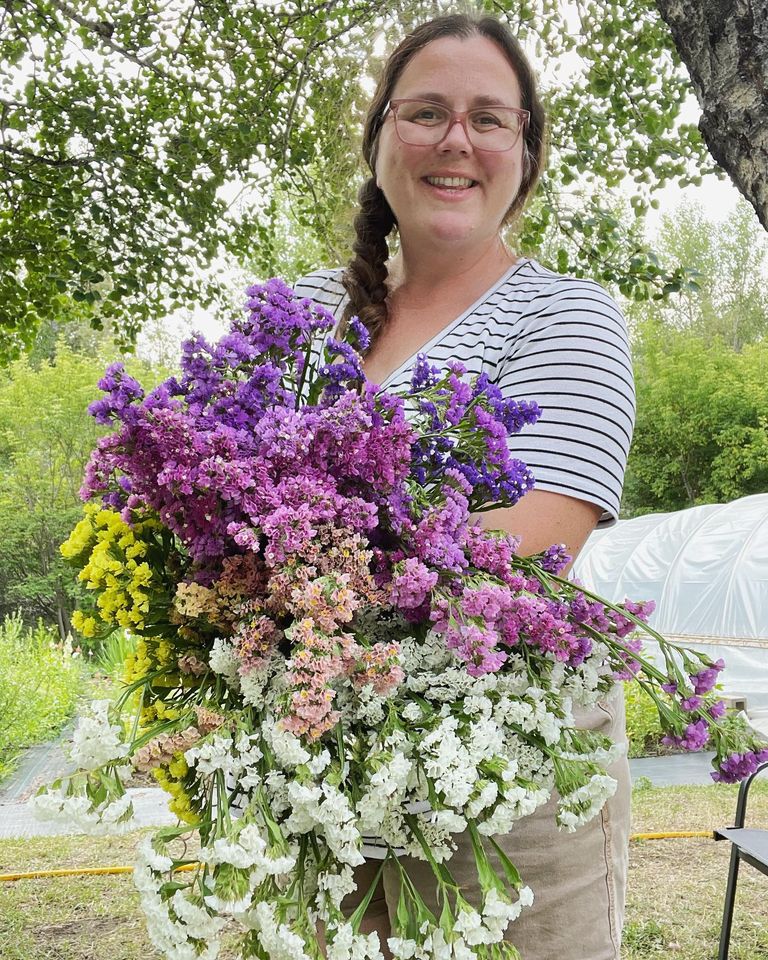
Statice is one of the backbone crops on my flower farm for both fresh and dried bouquets. It comes in nearly every colour of the rainbow and holds its shape and colour beautifully once dried. I grow it every year and use it constantly—not just during the summer, but in winter wreaths and arrangements, too!
If you’re looking for a reliable cut flower that plays well with others and dries like a dream, statice is a must-have in your cutting garden.
Why Grow Statice?
Statice is incredibly versatile. Whether you’re arranging fresh bouquets or crafting with dried flowers, you’ll want a steady supply of statice on hand. It’s cut-and-come-again, meaning you’ll get multiple flushes from each plant. I usually get three flushes: an initial flush with shorter to medium stems, a good flush, with long, usable stems, and a last flush that depends on the weather, but tends to be shorter again.
Statice is also cold-tolerant and reliable in a short growing season, which is perfect for Zone 3 gardeners. Even better, it holds its colour beautifully when dried and doesn’t tend to open further once harvested, so what you see is what you get.

Starting Statice from Seed
Statice is very easy to seed start, and usually germinates quite well. You can start it 8-10 weeks before your last frost, and, if need be, you can get away with 6 weeks before. Even though statice is considered a cool flower, I find that there’s not as much of a benefit in starting it earlier, but you can if you want to.
Once hardened off, statice can be planted out into garden beds, raised beds, or even large containers. Just know that if you grow it in containers, it will affect your stem length.
Statice doesn’t self-seed, so you’ll need to replant it each year. And beware: there is also a weed that looks a lot like statice when it’s young, and I have definitely let that weed grow longer than I should, thinking it might be statice!

Drying Statice
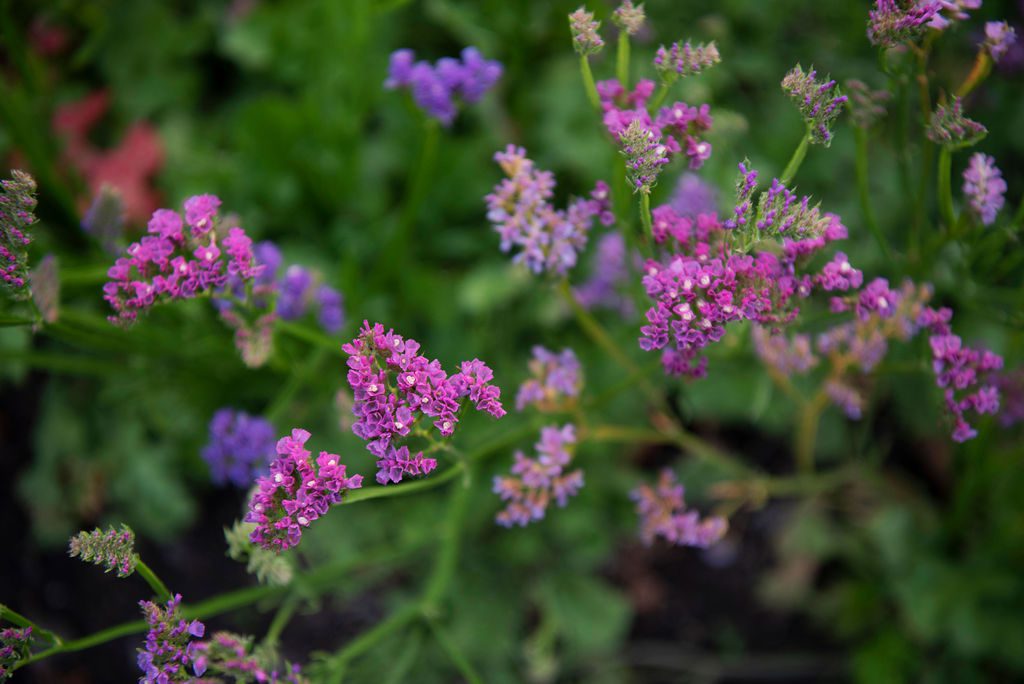
Statice dries really well. It tends not to open after you pick it for drying, so harvest at the openness you want.
It lasts a really long time and holds its colour for what feels like forever. Just try to keep it out of the sun, so it doesn’t fade!
The white varieties are especially useful in winter wreaths and arrangements, and the full spectrum of colours means you’ll always have something that works with your palette.

A Note on Colours (and the Case Against Highlighter Yellow)
Statice mixes often include a “highlighter yellow” flower, and I’m going to be honest: I hate it. It’s a really hard colour to arrange with, and nobody seems to like it. If you’re desperate for yellow, grow just a few plants. But in general, I’d avoid it if you can.
The apricot shades can also be tricky. This might be more of a personal anecdote, but I feel like of all the colours, the apricot is always the hardest to germinate and to bring to harvest, and the stems are always shortest.
If you liked this blog post, find me on Facebook, TikTok, and Instagram for more cold-climate vegetable gardening tips, delicious recipes, and cut flower goodness! I also make weekly videos over on my YouTube channel. I hope to see you there!
READY TO GROW YOUR OWN BEAUTIFUL CUT FLOWER GARDEN WITHOUT THE HASSLE?
I’ve taken all the guesswork out of creating a cut flower garden with my e-book, Cut Flowers Made Simple. Whether you’re a farmer florist, a beginner gardener, or anything in between, you’ll be able to start your own cut flower garden, with or without seed starting, growing annual flowers.



Becky