
Daffodils are a cheery harbinger of spring. While they don’t particularly like prairie climates, if you find the right spot where they’re happy, they’ll reward you with beautiful yellow, white, and peach blooms for years to come!
In this blog post, I’ll cover my tips and tricks for growing daffodils in a cold climate and short growing season.
More Than The Basic Grocery Store Yellow
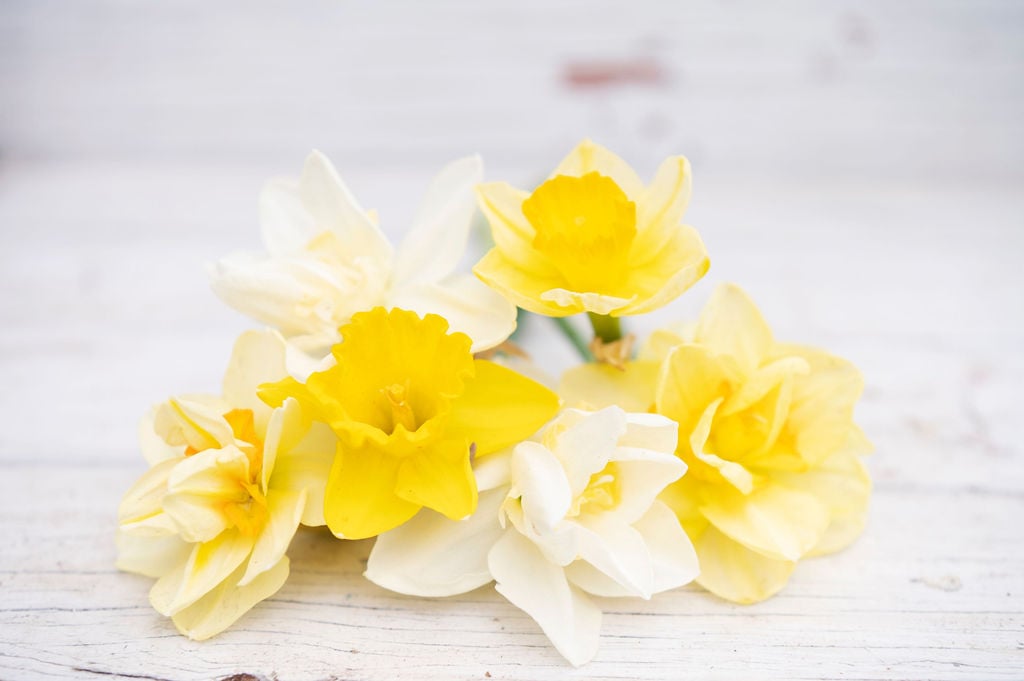
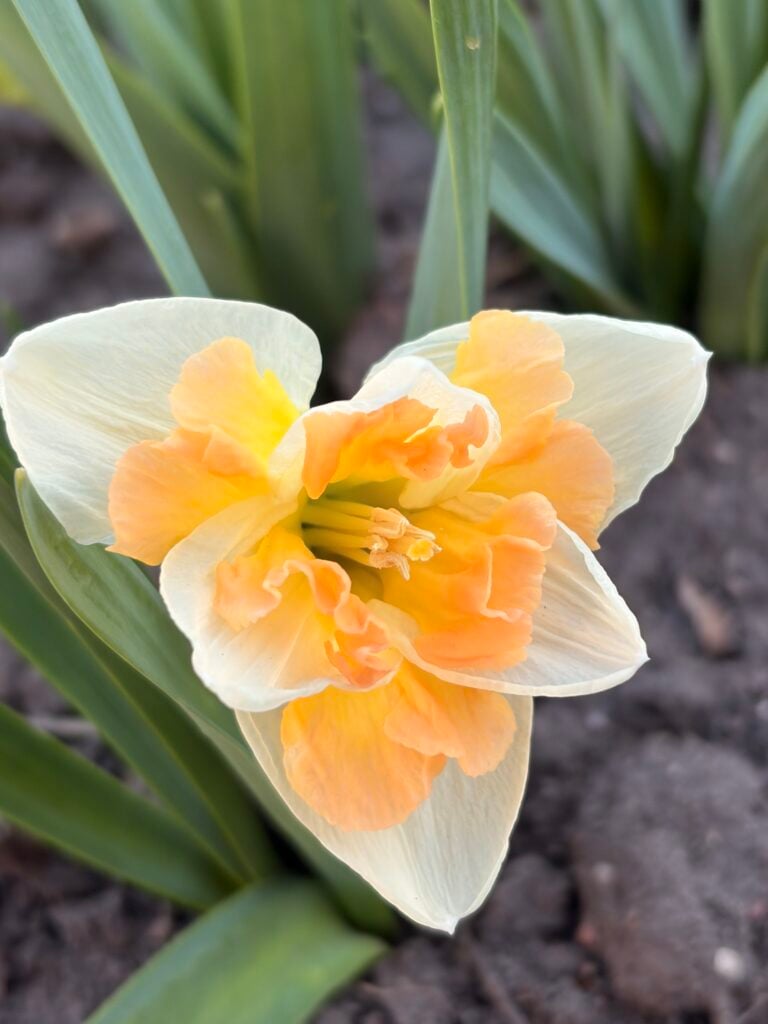
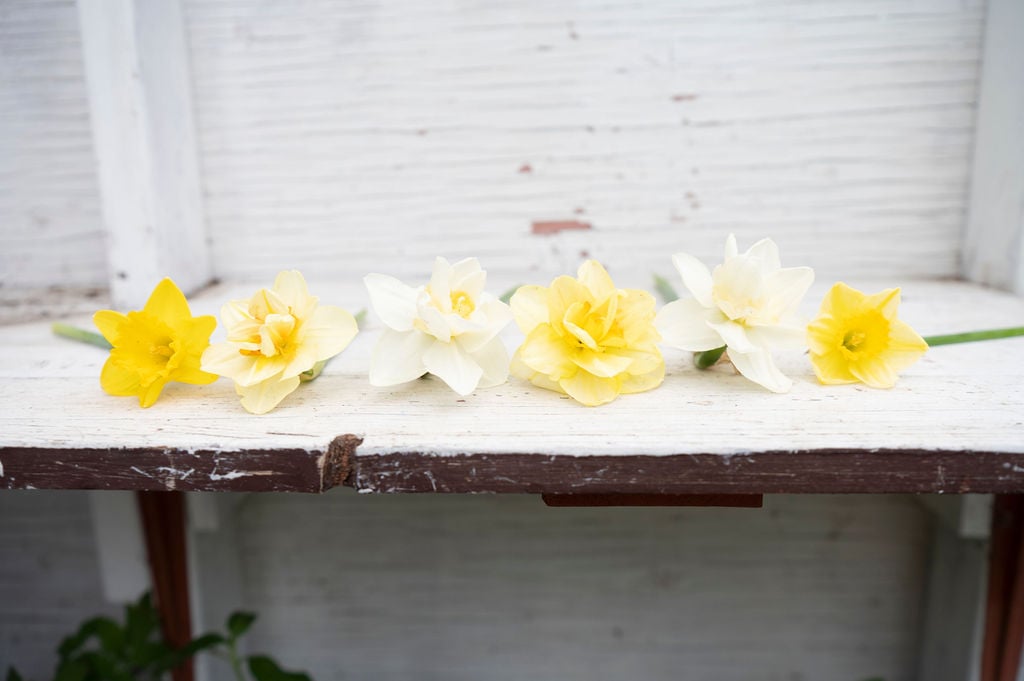
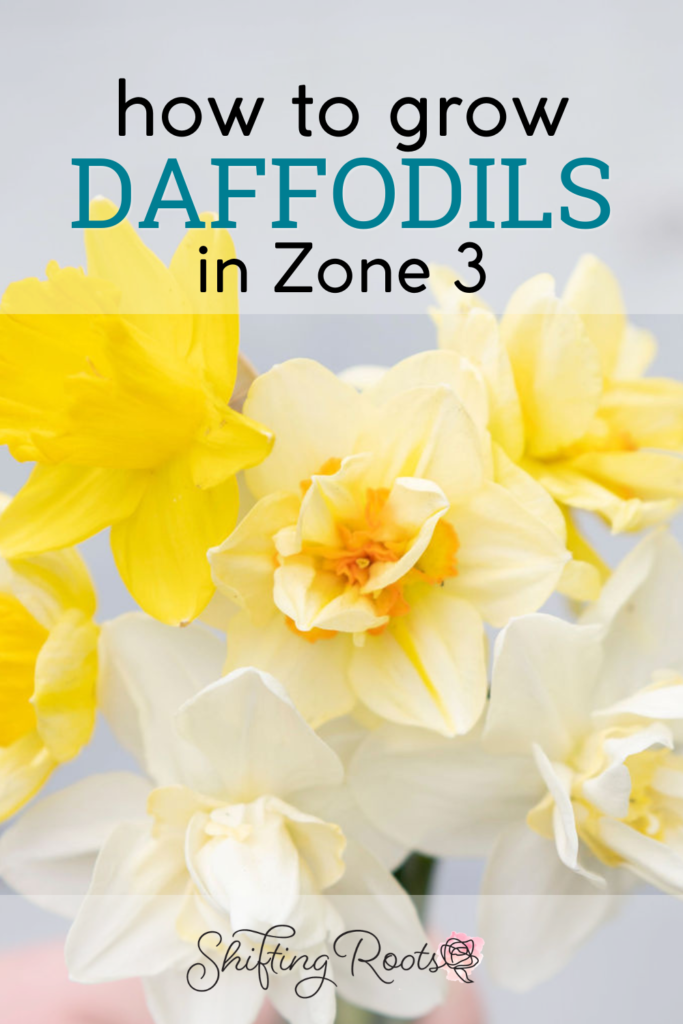
I feel like most people don’t bother planting daffodils because the only ones they know are the ugly yellow ones that grace most grocery stores in the winter. However, there are plenty of beautiful varieties you can grow, from doubles to singles, in shades of white, cream, apricot, orange, and every shade of yellow.
I like double daffodils the most, and some of my favourite varieties are Replete, Delnashaugh, and Spring Cheer.
When to Plant Daffodils
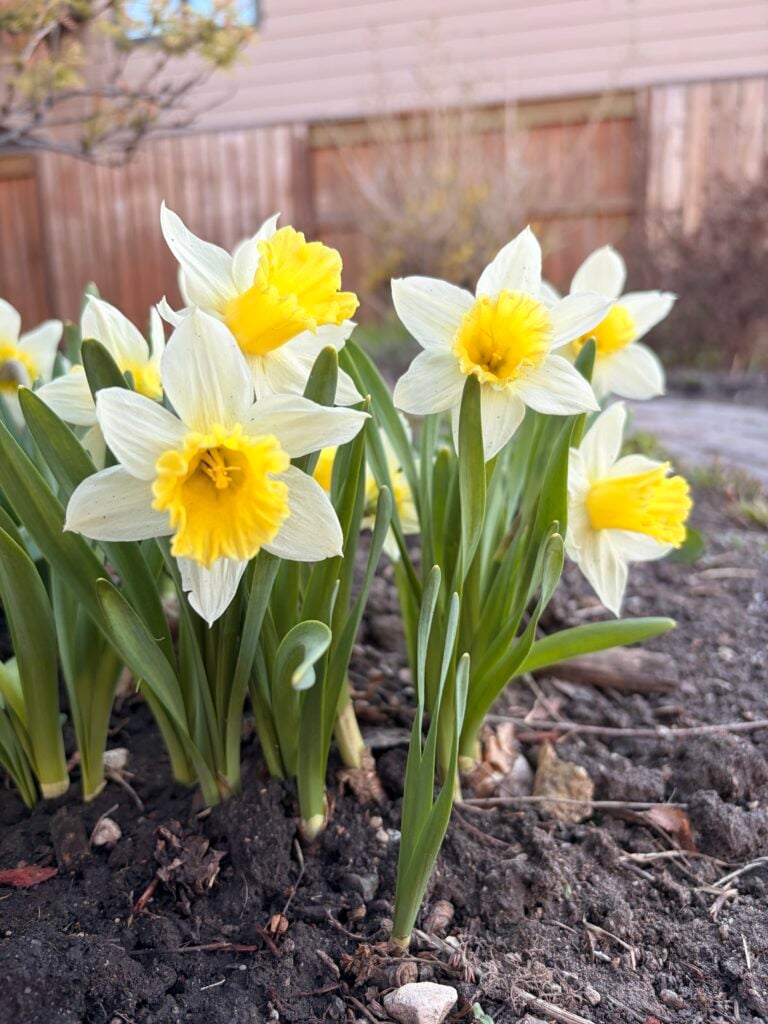
You’ll typically order your daffodil bulbs in July or August and then plant them from late September to the end of November, as long as the ground is workable. I usually aim for the end of September to the beginning of October because the weather is pleasant, temperatures are cool, and there’s usually no snow. No one enjoys drilling through frozen ground with an ice auger to get their bulbs in!
The first time I was successful at growing daffodils, I planted them just four feet away from a spot where they had failed to thrive the previous year. So don’t feel discouraged if you pick the wrong planting location—it happens!
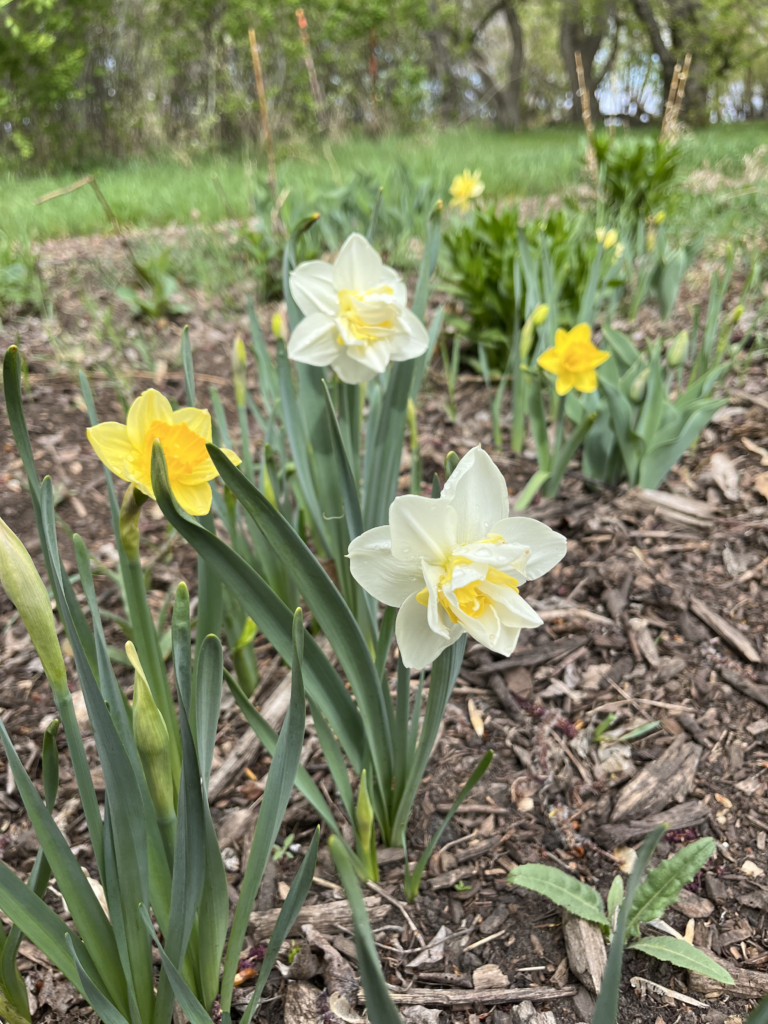
One reason my daffodils bloomed later than I’d hoped is that I planted them in an area of the yard where snow melts late in the season. If you want them to bloom earlier, try planting them in a spot where the snow clears first!
When planting in a landscaped area, consider planting in clumps for a natural look. If you’re growing them primarily to cut for bouquets, planting in rows makes harvesting much easier. Either way, daffodils multiply over the years, so you will eventually need to dig out some of the bulbs.
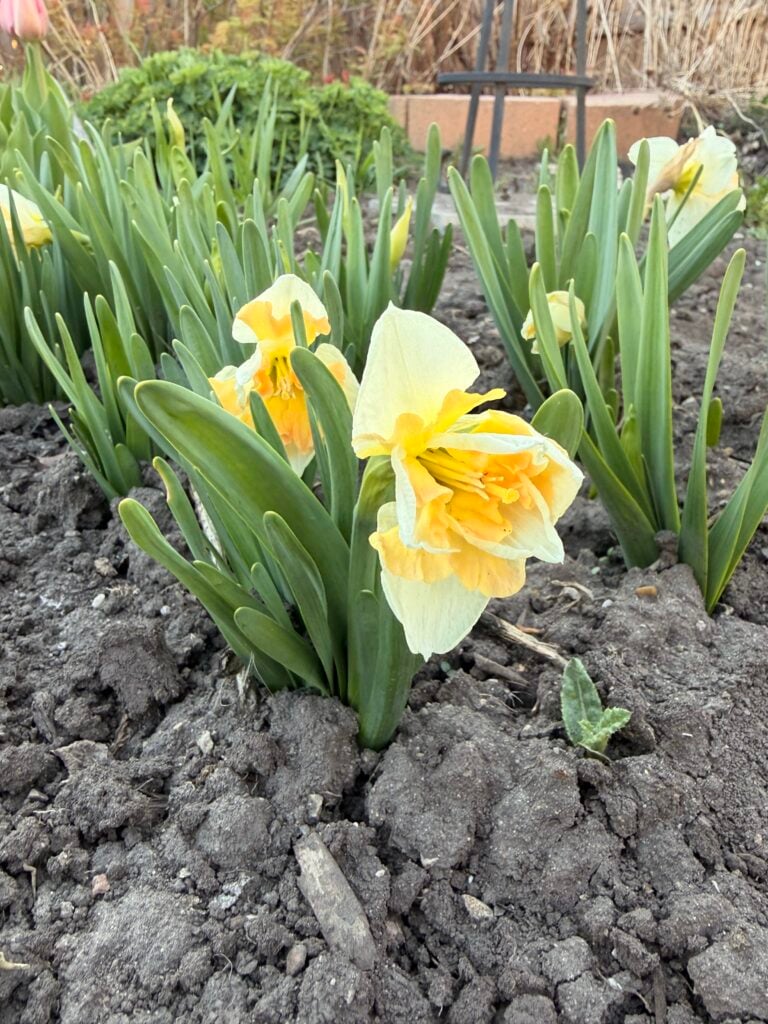
I’ve noticed that sometimes when I plant daffodils, they don’t come up at all, or only the greens sprout, with no blooms. I suspect I may have planted them too deeply. In cases where they haven’t come up, I think the soil might have been too dry. My mom plants her bulbs just below the surface, and hers come up beautifully, so I think I need to experiment with planting at a shallower depth next year.
If anyone has insights on this, please share your thoughts in the comments!
The Best Time to Harvest Daffodils
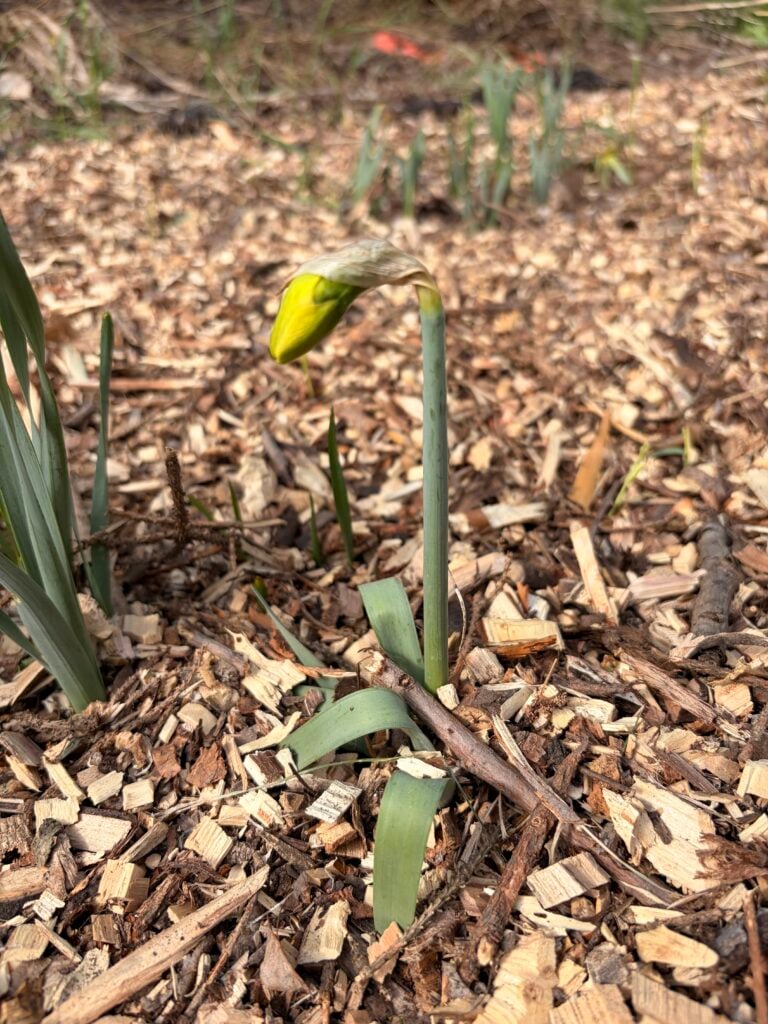
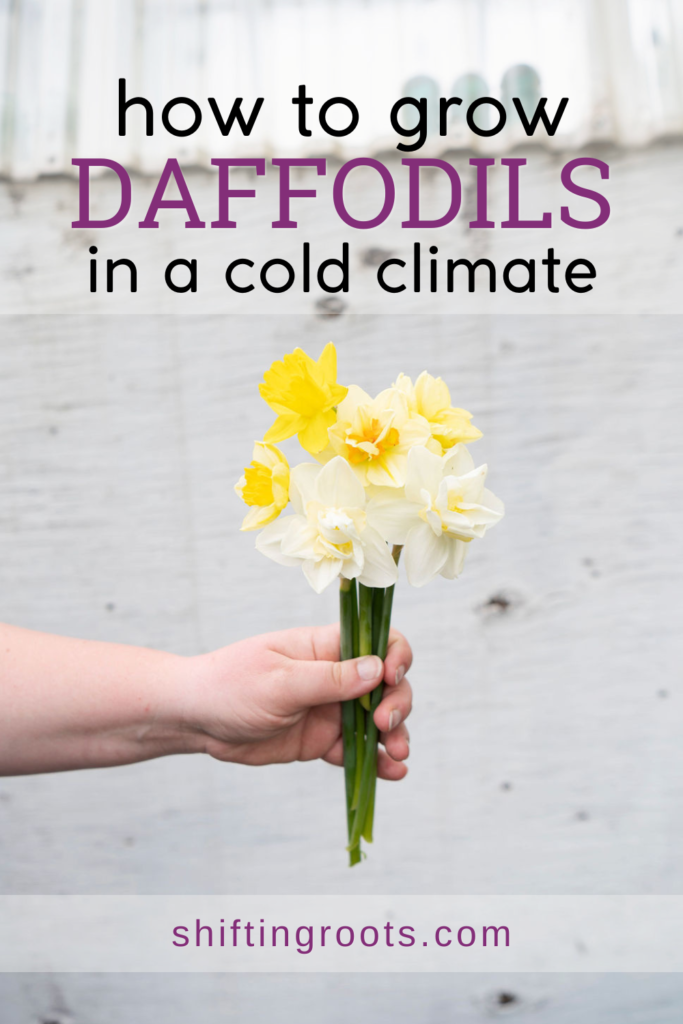
If you want to harvest some daffodils for cut flowers, you’ll do so at the gooseneck stage (as seen in the photo below). This will give you the longest vase life! However, if you’re just harvesting for your own table, harvest whenever you’d like.
Cut as close to the base of the stem as you can! You do not have to take them out of the ground at the end of the season. Just leave them in the soil, and they will come back!
Note: Daffodils produce a toxic sap once they are cut. To prevent this sap from contaminating other flowers, it’s best to keep daffodils in water by themselves for about four hours before mixing them with other blooms. This allows the stems to heal, ensuring they don’t become sticky and infect other flowers in your arrangement.
Frequently Asked Questions About Growing Daffodils
Do daffodils grow back every year?
Yes, they’re perennials!
How do you get daffodils to spread?
Nothing at all! They will naturally multiply underground by producing smaller ‘daughter’ bulbs. Just let Mother Nature do the work!
Can you leave daffodil bulbs in the ground all year?
Yes! And you should!
Are daffodils easy to grow?
It depends on where you live. In the prairies, it’s finicky, especially if you have sandy soil. It’s not their favourite, but it can be done. If you have clay soil or are in the Pacific Northwest, you’ll be fine.
What is the best fertilizer for daffodils?
A general compost tea, H-start, or all-purpose fertilizer is good enough. You can also use the Gaia Bloom fertilizer, if you’d prefer. A layer of leaf mulch is always good, too!
What not to plant next to daffodils?
In my experience, I plant them right next to things that are summer-blooming because I know once summer takes off, the daffodils will be long faded. I have never had difficulties growing them next to any particular plants.
If you liked this blog post, find me on Facebook, TikTok, and Instagram for more cold-climate vegetable gardening tips, delicious recipes, and cut flower goodness! I also make weekly videos over on my YouTube channel. I hope to see you there!
READY TO GROW YOUR OWN BEAUTIFUL CUT FLOWER GARDEN WITHOUT THE HASSLE?
I’ve taken all the guesswork out of creating a cut flower garden with my e-book, Cut Flowers Made Simple. Whether you’re a farmer florist, a beginner gardener, or anything in between, you’ll be able to start your own cut flower garden, with or without seed starting, growing annual flowers.
Join the conversation